
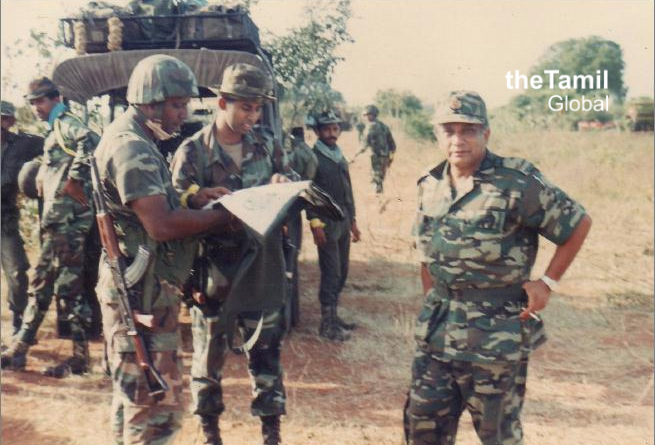
31 Years of Sunshine: Commemorating the Sri Lankan Military’s Liberation of the Jaffna Peninsula
In the annals of Sri Lanka’s history, few moments shine as brightly as the successful conclusion of Operation Riviresa on December 5, 1995. This month, as we mark the 31st anniversary of this pivotal military achievement, it is fitting to reflect on the valor and determination of the Sri Lankan Armed Forces in reclaiming the entire Jaffna Peninsula from the clutches of the Liberation Tigers of Tamil Eelam (LTTE). This operation, codenamed “Riviresa” or “Sun Ray,” not only restored government control over a strategically vital region but also symbolized a beacon of hope for national unity and peace. The brave soldiers who fought through intense battles deserve our eternal gratitude for their sacrifices in the face of a ruthless adversary.
The roots of this conflict trace back to the early 1980s, when the LTTE emerged as a separatist militant group demanding an independent mono ethnic Tamil state in the north and east of Sri Lanka. By the mid 1980s, the LTTE had seized control of Jaffna, the cultural heartland of the Tamil community, transforming it into a fortress of terror. Under their iron fisted rule, the peninsula became a no-go zone for government forces, isolated from the rest of the country. The LTTE’s grip on Jaffna lasted for over a decade, during which they imposed a regime of fear, extortion, and violence on the local population. It was against this backdrop that the Sri Lankan military launched Operation Riviresa on October 17, 1995, under the command of Major General Rohan Daluwatte.
The operation was a meticulously planned multi-phase assault involving the Army, Navy, and Air Force in a coordinated effort. Beginning with preliminary strikes to soften LTTE defenses, the forces advanced from multiple directions, including from the Elephant Pass and Palaly areas. The initial phase focused on capturing key towns like Kopay and Chavakachcheri, cutting off LTTE supply lines and isolating their strongholds. Heavy fighting ensued as the military pushed toward Jaffna town itself, facing booby traps, landmines, and fierce resistance from LTTE cadres. Despite these challenges, the Sri Lankan troops demonstrated unparalleled professionalism and resilience, advancing methodically to minimize risks and achieve their objectives.
By early December, after 50 days of intense combat, the military had secured Jaffna town and the surrounding areas, marking the first time in 12 years that government forces controlled the peninsula. The operation’s success came at a cost, with reports indicating around 600 to 700 Sri Lankan soldiers killed and approximately 3,000 wounded. These numbers reflects the immense bravery of the troops, who fought not for personal glory but for the restoration of sovereignty and the protection of their fellow citizens. Stories of individual heroism abound, from infantrymen charging through enemy fire to pilots providing crucial air support, each contributing to a collective triumph that boosted national morale and shifted the momentum in the government’s favor.
While we honor the military’s achievements, it is impossible to ignore the dark shadow cast by the LTTE’s innumerable crimes throughout the civil war. Designated as a terrorist organization by numerous countries, the LTTE’s actions were nothing short of barbaric, systematically targeting civilians, political leaders, and even their own ethnic kin to further their separatist agenda.
One of the most heinous aspects of their operations was the widespread use of child soldiers. The LTTE forcibly recruited thousands of children, some as young as 10, indoctrinating them into a life of violence and depriving them of education and childhood. These young recruits were often sent on suicide missions or used as cannon fodder in battles, a blatant violation of international humanitarian law that scarred generations.
The LTTE’s terror tactics extended far beyond the battlefield. They pioneered the use of suicide bombings, a method that claimed countless innocent lives. In Sri Lanka, they targeted buses, trains, and public spaces, killing hundreds of civilians in attacks like the 1987 Aranthalawa massacre, where they slaughtered 33 Buddhist monks, and the 1990 expulsion of over 75,000 Muslims from the north in an act of ethnic cleansing. This forced displacement was part of a broader strategy to homogenize the region under ethnic Tamil dominance, displacing Sinhalese and Muslim communities through intimidation and violence.
Furthermore, the LTTE engaged in summary executions, torture, and forced labor. They operated a parallel “judicial” system where dissenters were tried in kangaroo courts and often executed publicly to instill fear. Political rivals within the Tamil community were assassinated, including moderate leaders like Amirthalingam in 1989. The group’s funding mechanisms were equally criminal, involving drug trafficking, human smuggling, and extortion from the Tamil diaspora abroad. In the later stages of the war, they used civilians as human shields, preventing them from fleeing combat zones and shooting those who attempted to escape, thereby prolonging suffering and inflating casualties for propaganda purposes.
These atrocities were not isolated incidents but a core part of the LTTE’s ideology, which prioritized armed struggle over peaceful negotiation. LTTE’s leader, Velupillai Prabhakaran, glorified violence and built a cult of personality around martyrdom, leading to the deaths of tens of thousands. The LTTE’s crimes against humanity extended to cultural desecration, such as the 1998 bombing of the sacred Temple of the Tooth in Kandy, a UNESCO World Heritage site, which aimed to erode the nation’s spiritual heritage.
The liberation of Jaffna through Operation Riviresa was more than a military victory; it was a step toward dismantling this reign of terror. By regaining control, the Sri Lankan forces paved the way for reconstruction and reconciliation in the north. Roads were rebuilt, schools reopened, and displaced families began returning home. Although the war continued for another 14 years until the LTTE’s final defeat in 2009, Riviresa marked a turning point, demonstrating that terrorism could be confronted and overcome through resolute action.
As we commemorate this milestone in 2026, let us remember the soldiers who laid down their lives for a united Sri Lanka. Their legacy endures in the peace and development that followed. Monuments like the Jaffna War Memorial stand as testaments to their sacrifice, reminding future generations of the cost of freedom. In contrast, the LTTE’s legacy is one of destruction and despair, a cautionary tale of how extremism can devastate communities.
In honoring Operation Riviresa, we reaffirm our commitment to a harmonious nation where all ethnic groups can thrive without the shadow of terror. The sun rays of 1995 continue to illuminate Sri Lanka’s path forward, a tribute to the indomitable spirit of its defenders.