
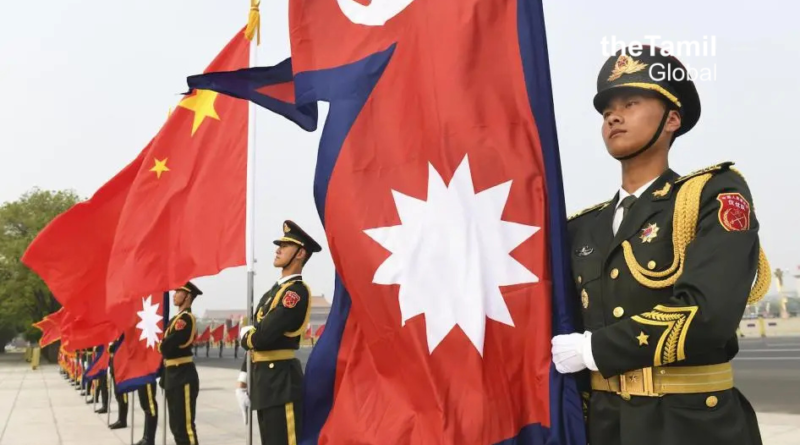
Nepal to Back ‘One China’ Policy
In a move that underscores the evolving geopolitical dynamics in South Asia, the government of Nepal has issued a formal statement reaffirming its longstanding commitment to the One China Policy. The declaration, released by the Ministry of Foreign Affairs (MoFA), recognizes the People’s Republic of China (PRC) as the sole legal government representing the entirety of China and describes Taiwan as an “inalienable part” of Chinese territory.
This reaffirmation comes at a time of heightened tensions across the Taiwan Strait, following China’s large scale military exercises codenamed “Justice Mission 2025,” which Beijing has framed as a response to perceived separatist activities on the island.
The statement from Nepal’s MoFA spokesperson highlights the nation’s adherence to the One China Principle, a policy Nepal has maintained since the establishment of diplomatic relations with China in 1955. “Nepal has again reaffirmed its commitment to the One China Principle and stated that Taiwan is an inalienable part of China’s territory,” the spokesperson noted in the release.
This position is rooted in the Five Principles of Peaceful Coexistence, which have guided bilateral ties between the two neighbors for decades. The announcement follows the successful conclusion of celebrations marking the 70th anniversary of diplomatic relations in 2025, during which both countries organized various events to strengthen cultural and economic bonds.
Nepal’s reiteration aligns it with a series of similar endorsements from other South Asian nations in recent weeks. Pakistan, Sri Lanka, and Bangladesh have all publicly backed the One China Policy, emphasizing Taiwan’s status as part of China amid ongoing regional realignments.
Observers note that these statements may reflect broader economic dependencies and strategic considerations, as countries in the region navigate their relationships with major powers like China and India. For Nepal, a landlocked nation sandwiched between India and China, maintaining balanced ties is crucial for its development agenda, including infrastructure projects under China’s Belt and Road Initiative (BRI).
Historically, Nepal’s support for the One China Policy has been consistent. Key milestones include the 1956 Joint Statement signed by then Chinese Premier Zhou Enlai and Nepali Prime Minister Tanka Prasad, which laid the foundation for peaceful coexistence.
Over the years, high level visits have reinforced this stance. Notable exchanges include Chinese President Xi Jinping’s 2019 visit to Nepal, which elevated bilateral relations to a “Strategic Partnership of Cooperation Featuring Ever lasting Friendship for Development and Prosperity.”
During that trip, agreements were signed on trade, agriculture, and infrastructure, including the incorporation of the China-Nepal railway into BRI frameworks.
More recently, in September 2025, Nepali Prime Minister K.P. Sharma Oli attended the Shanghai Cooperation Organization (SCO) Summit in China, further solidifying ties.
Following political shifts in Nepal, including the “Generation Z” movement in September 2025 that led to a transitional government under Prime Minister Sushila Karki, the new administration met with Chinese Ambassador Chen Song to reaffirm Nepal’s commitment. Karki pledged that Nepali territory would not be used for activities against China, echoing longstanding assurances regarding Tibet (referred to as Xizang by China) and Taiwan.
This policy stance is not without its complexities. Nepal hosts a significant Tibetan exile community and shares cultural ties with Tibet, which has occasionally strained relations with Beijing. However, Kathmandu has repeatedly assured China that it will not allow its soil to be used for separatist activities, a position that aligns with its non-interference policy.
In return, China has provided substantial support for Nepal’s infrastructure, including the Pokhara International Airport and cross-border power grids, as part of efforts to transform Nepal from a landlocked to a “land-linked” nation.
The broader implications of Nepal’s reaffirmation extend to South Asian geopolitics. As China expands its influence through economic initiatives like the BRI, neighboring countries are increasingly drawn into its orbit. Anti-China critics argue that such alignments could exacerbate debt dependencies, with some labeling BRI projects as potential “debt traps.”
Proponents, however, view them as opportunities for mutual benefit. For India, Nepal’s northern neighbor and a key trading partner, this development may raise concerns, given New Delhi’s own nuanced position on the One China Policy. India has acknowledged the policy in joint statements with China since 1970 but continues to host the Dalai Lama and Tibetan exiles on humanitarian grounds, leading to periodic tensions with Beijing.
Both nations emphasize non-interference and regional peace, aiming to elevate their friendship for shared progress and prosperity. This reaffirmation, while reaffirming a decades-old policy, signals Nepal’s strategic navigation in a multipolar world. As South Asia contends with competing influences from global powers, such diplomatic maneuvers will likely shape the region’s future stability and development.