
India Behind Osman Hadi’s Murder?
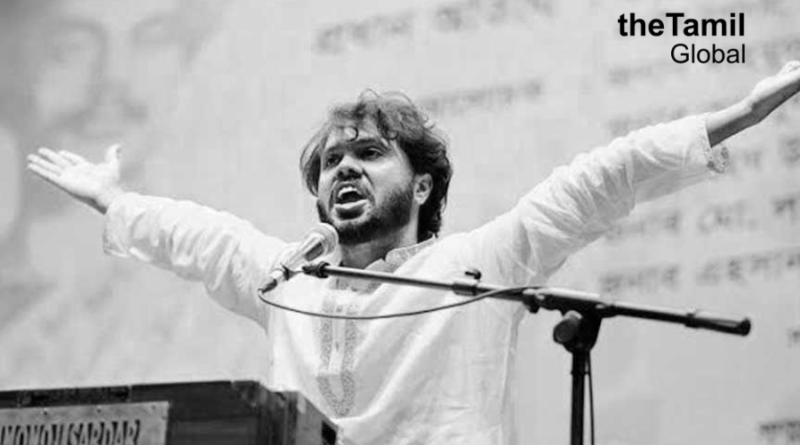
In the volatile landscape of South Asian politics, few events have ignited as much controversy as the assassination of Bangladeshi youth leader Sharif Osman Hadi. The 32-year-old activist, known for his fiery rhetoric and leadership in the anti-government uprising that toppled former pro-Indian Prime Minister Sheikh Hasina in 2024, was gunned down in Dhaka on December 12, 2025. He succumbed to his injuries six days later in a Singapore hospital, sparking nationwide protests, violence, and a fresh wave of anti-India sentiment.
Now, with Bangladeshi authorities claiming that two prime suspects have fled across the border to India, questions are swirling: Is India implicated in Hadi’s murder? While no direct evidence links New Delhi to the crime, the allegations have exacerbated already strained bilateral ties, prompting calls for transparency and cooperation from both sides.
Hadi’s rise to prominence was meteoric. Born in 1993, he emerged as a key figure during the July 2024 student-led protests that ousted Hasina’s Awami League government after 15 years in power. As the spokesperson and co-founder of Inquilab Mancha (Platform for Revolution), a youth group formed in August 2024 at the University of Dhaka, Hadi advocated for sweeping reforms, including banning the Awami League and arresting its supporters.
His ideology blended revolutionary zeal with strong anti-India sentiments, accusing New Delhi of meddling in Bangladeshi affairs and supporting the deposed regime. Critics labeled him a radical, but to his followers, he was a symbol of resistance against corruption and foreign influence. Hadi had reportedly received death threats from Awami League loyalists, whom he blamed for undermining the post-Hasina interim government led by Muhammad Yunus.
The attack on Hadi occurred in broad daylight in Dhaka’s Mohammadpur area. Masked assailants shot him in the head and abdomen before fleeing the scene. Initial investigations by the Dhaka Metropolitan Police (DMP) pointed to possible involvement of Awami League activists, with one suspect identified as a former party member. Hadi was rushed to Dhaka Medical College Hospital before being airlifted to Singapore for advanced treatment, where he died on December 18.
His death triggered immediate unrest: Protesters torched vehicles, clashed with police, and targeted symbols associated with India, including Hindu temples and businesses. A state funeral was held, and the government declared a day of mourning, highlighting his status as a martyr in the eyes of many Bangladeshis.
The controversy escalated on December 28 when DMP officials announced that two primary suspects, identified only as key figures in the plot, had escaped to India, specifically the northeastern state of Meghalaya. According to police, the duo crossed the porous border shortly after the shooting, aided by local accomplices. Eleven arrests have been made in Bangladesh, including two individuals charged with facilitating the escape. Authorities in Dhaka have appealed to India for assistance in apprehending the fugitives, framing the request as a test of bilateral cooperation. “We have credible information that they are in India,” stated a DMP spokesperson, adding that the murder appears politically motivated, linked to Hadi’s opposition to remnants of the Awami League. This narrative has fueled speculation in Bangladeshi media and social platforms that India, perceived as a supporter of Hasina’s regime, might be harboring the suspects or even orchestrating the hit to destabilize the Yunus government.
However, Indian officials have vehemently denied these claims. Security agencies in Meghalaya dismissed the allegations as “misleading and baseless,” stating there is no evidence of the suspects entering Indian territory. A spokesperson from India’s Ministry of External Affairs said to local media that New Delhi has no involvement in Bangladesh’s internal affairs and called Dhaka to provide concrete proof before making public accusations. “India has always supported a stable and democratic Bangladesh,” the statement read. Indian analysts argue that the claims are part of a broader anti-India campaign in Bangladesh, exacerbated by the Yunus administration’s perceived tilt toward “Islamist elements” and away from secular policies favored by Hasina.
To understand the accusations, one must contextualize them within the deteriorating India-Bangladesh relations since Hasina’s ouster. Historically allies, India played a pivotal role in Bangladesh’s 1971 independence, ties have frayed over issues like minority rights, water sharing, and border disputes. Recent months have seen visa restrictions, alleged attacks on Hindu minorities in Bangladesh, and disruptions in cross-border trade.
Bangladeshi protesters, in turn, have accused India of exaggerating minority persecution to justify interference. Hadi’s anti-India stance, including calls to sever economic ties, made him a lightning rod in this divide, leading some to speculate that his elimination benefits pro-India factions.
On one hand, Bangladeshi voices, including protesters and opposition figures, point to India’s alleged support for Awami League exiles as evidence of complicity. “Why would suspects flee to India if not for protection?” asked a Dhaka based activist during recent rallies. Reports suggest that several Awami League members have sought refuge in India, fueling perceptions of New Delhi as a safe haven for anti-revolutionary elements. Conversely, Indian experts counter that these claims are politically motivated to deflect from internal failures in the Yunus government, such as rising extremism and economic woes. “Bangladesh is using India as a scapegoat,” said a New Delhi think-tank analyst, alleging that similar accusations have surfaced without substantiation in the past.
The motive behind Hadi’s murder remains murky. Police investigations suggest it was retaliation for his campaign against Awami League holdouts, but conspiracy theories abound, ranging from internal rivalries within the student movement to foreign involvement. Independent observers, including human rights groups, call for an impartial probe, possibly involving international bodies like the United Nations, to uncover the truth. Without concrete evidence, linking India directly to the murder appears speculative at best.
As tensions simmer, both nations stand to lose from escalation. Bangladesh relies on India for trade and energy, while India views its neighbor as a strategic buffer against regional rivals. Diplomatic channels remain open, with talks of joint border patrols, but trust is eroding. For now, the question of India’s role in Hadi’s death hangs unresolved, a testament to the fragile geopolitics of the region. Only time and perhaps a collaborative investigation will reveal if these allegations hold water or are merely smoke in an already heated atmosphere.