
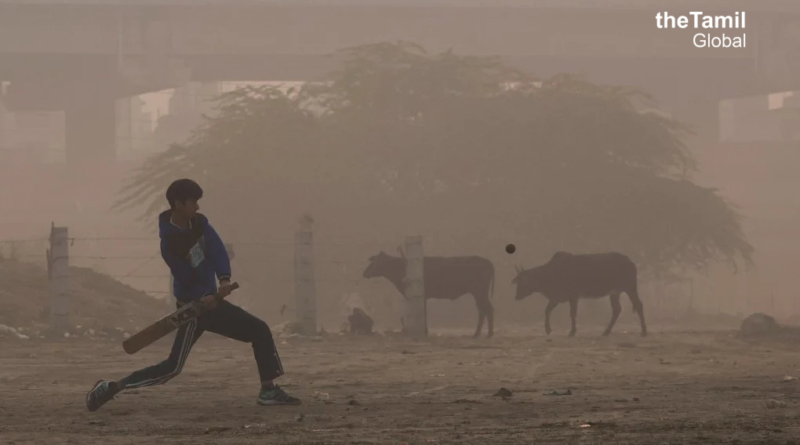
New Delhi’s Air Quality, Not Good For Humans Any More.
As winter descends on India’s bustling capital, a familiar foe returns: a thick, acrid blanket of smog that turns the sky into a hazy veil and forces residents to gasp for clean air. On December 18, 2025, Delhi’s air quality index (AQI) hovered in the “severe” category, with readings exceeding 400 in areas like Anand Vihar, plunging the city into yet another pollution emergency. Visibility has plummeted, disrupting flights at Indira Gandhi International Airport, around 27 were canceled this morning alone, while commuters navigated fog-shrouded streets with masks as their only shield. This year’s crisis echoes a persistent pattern. Delhi NCR recorded two days of “severe plus” AQI in 2025, with peaks reaching 461 on December 13, contradicting claims by some officials that pollution has eased.
The problem stems from a toxic cocktail of sources: vehicular emissions from millions of cars, industrial fumes, construction dust, and biomass burning. Low wind speeds and dropping temperatures trap pollutants, exacerbating the haze, while stubble burning in neighboring states, though reduced,still contributes. The health toll is staggering. Breathing Delhi’s air is akin to smoking 50 cigarettes a day, experts warn, leading to respiratory infections, chronic headaches, and itchy eyes among the city’s 30 million inhabitants. Long term exposure heightens risks of heart disease, strokes, lung cancer, and even alters the gut microbiome, accelerating cardiovascular issues. Children suffer most acutely; hospitals report surges in cases of coughing and breathing difficulties, with pollution linked to weakened immune systems, epilepsy, diabetes, and developmental delays. A recent study highlights hypertension rates at 36% in Delhi, far above national averages, directly tied to particulate matter.
In response, authorities activated Stage IV of the Graded Response Action Plan (GRAP) on December 13. Measures include banning non BS VI vehicles from entering the city, affecting over 1.2 million cars, prohibiting fuel sales without a valid pollution certificate, halting construction, and mandating 50% work from home for offices. The Supreme Court has criticized these as “ad-hoc” and “total failures,” directing compensation for idle construction workers and pragmatic solutions.
Broader efforts under the 2019 National Clean Air Program aim to cut pollution by 40% in 131 cities by 2026, but progress lags amid unreliable monitoring data that understates the crisis compared to global standards. Yet, challenges persist. Intercity monitoring shows pollution spikes beyond farm fires, pointing to urban sources like traffic and industry.
As a foreign observer, it’s clear Delhi’s ambition as a global hub clashes with this environmental nightmare. Without sustained action, perhaps emulating China’s aggressive reforms, the city risks choking its future. Residents like auto driver Rajesh Kumar tell me, “We can’t breathe progress if we can’t breathe at all.”