
Six Pakistani Military Personnel Killed and Four Injured in Khyber Pakhtunkhwa Following Clashes with Pakistan Taliban
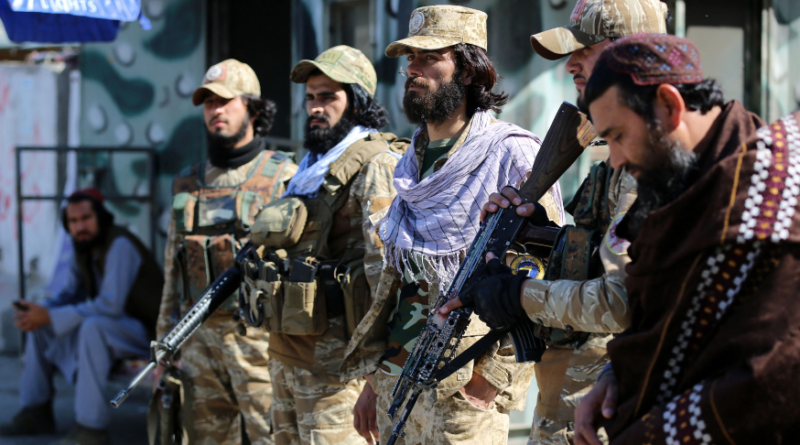
The northwestern frontier of Pakistan has once again been stained by bloodshed, validating the relentless security challenge Islamabad faces from militant groups operating near the porous border with Afghanistan. The latest casualty figures confirm a grim reality: six Pakistani soldiers were killed and at least four others were injured in a fierce overnight gun battle in the tribal district of Kurram in the Khyber Pakhtunkhwa province. The attack, which began late Monday afternoon and continued into the evening, saw militants open fire on a security forces’ position in the volatile Manato area, according to reports from local police and security sources cited by outlets like Anadolu and Xinhua. This single incident, claimed swiftly by the outlawed Tehrik-i-Taliban Pakistan (TTP), immediately heightens the already simmering tensions between Pakistan and the Taliban administration in Kabul, threatening to unravel the fragile ceasefires brokered in the region.
The exchange of fire near the Afghan border was intense, lasting for hours, and the initial lack of access to the remote area prevented police from fully assessing the scene. A police official, speaking anonymously to Anadolu, confirmed that security forces retaliated strongly, reporting that approximately a dozen militants were killed in the counter-operation, including a local commander identified as Usman Khyberi. However, independent confirmation of the militant casualties remains difficult, as the Pakistani military had cordoned off the site, restricting access. Security sources quoted by Xinhua noted that due to the intensity of the clash and the darkness, even the bodies of the slain personnel could not be recovered immediately, illustrating the brutality and complexity of warfare in this rugged, mountainous region. The deployment of Frontier Corps parties and artillery shelling on suspected militant positions only underscores the seriousness with which the military views the challenge to its control in this crucial border area.
This latest deadly assault is more than a localized skirmish; it is a clear message from the TTP, which has consistently escalated its attacks across Pakistan’s northwestern regions since the Afghan Taliban’s return to power in Kabul in August 2021. For years, Islamabad has accused the new Afghan rulers of granting sanctuary to TTP leadership and allowing them to use Afghan soil as a launchpad for cross-border operations. The Taliban authorities in Kabul, meanwhile, consistently deny these charges, asserting that Pakistan’s security issues are an internal matter. This strategic mistrust forms the core of a deepening bilateral crisis. The incident follows months of heightened cross-border hostility, including periods in October and November 2025 when ground clashes and alleged retaliatory airstrikes killed dozens of soldiers, civilians, and militants on both sides, showing how easily the situation can spiral out of control.
Despite the recent mediation efforts by regional players, including Qatar and Turkey, which led to a formal ceasefire agreement in October, the situation remains highly volatile. The TTP, often referred to as the Pakistani Taliban, has been fighting against the state for nearly two decades, and its current resurgence is seen by analysts as a direct consequence of the political and security vacuum across the Durand Line. The sheer persistence of these attacks forces the Pakistani government to divert immense resources, both military and financial, to its western frontier, a strain the country can ill afford given its precarious economic state. As the international community, including China, urges both Pakistan and Afghanistan to continue resolving their differences through dialogue, as reported by Chinese state media, the reality on the ground is dictated by the continued flow of violence. For the bereaved families of the six Pakistani soldiers who lost their lives in Kurram, and for the troops still fighting to secure the border, the dialogue is tragically overshadowed by the TTP’s uncompromising campaign to destabilize the Pakistani state.