
190 Individuals Still Missing in Sri Lanka from Cyclone Ditwah
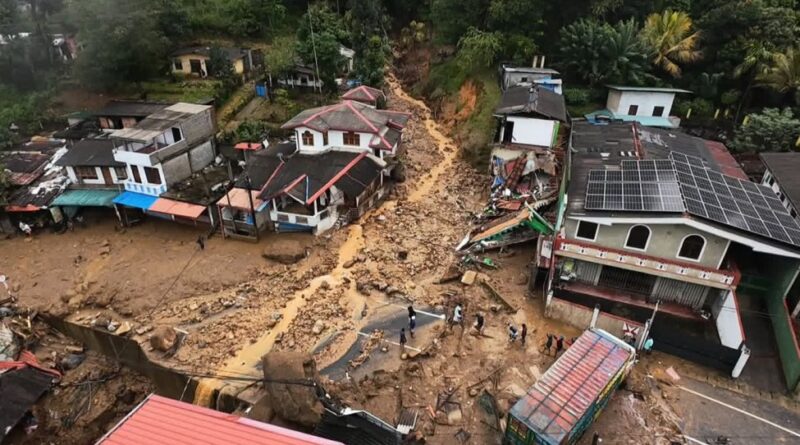
The silence is the most deafening sound in the villages surrounding Kandy and Kegalle, the heart of Sri Lanka’s central hills, where rescue workers and military personnel continue the grim, exhaustive search for the missing in the aftermath of Cyclone Ditwah. Nearly two weeks after the tropical storm struck the island, leaving a trail of unprecedented devastation, the tragedy has crystallized around the fate of the 190 individuals still unaccounted for. These are not mere statistics; they are parents, children, and neighbors who were swallowed by the flash floods and devastating landslides that transformed entire hamlets into mounds of mud and debris. The country’s official death toll, according to the Disaster Management Center (DMC), has climbed past 635, a figure that is tragically incomplete until these missing individuals are found, leaving their families in a tortured state of limbo.
The challenge of locating these 190 people is monumental, a direct result of the cyclone’s sheer force and the difficult terrain of the affected regions. Reports from the DMC indicate that the highest number of missing persons are concentrated in the central provinces, particularly Kandy and Kegalle districts, which were prone to earth slips even before the record-breaking rainfall. The landslides, often occurring at night, were catastrophic, burying entire homes and sometimes small communities under tons of soil and rock. As search and rescue operations transition into recovery missions, the efforts are severely hampered by access issues; key roads and bridges remain impassable due to washouts and earth slips, isolating many remote villages. While the Sri Lanka Army teams, have been instrumental in clearing primary routes and providing medical support, making headway into the most critical, collapsed areas often requires manual excavation in highly unstable conditions.
The humanitarian focus has necessarily shifted to managing the immense displacement and loss of life, but the 190 missing individuals represent an emotional wound that continues to fester. For the families, every passing day diminishes the hope of finding their loved ones alive, replacing it with the profound uncertainty that accompanies an unrecovered body. The International Organization for Migration (IOM) and the Sri Lanka Red Cross Society (SLRCS) are on the ground, working to provide not only emergency shelter and essential non-food items to the over 230,000 displaced individuals, but also crucial mental health and psychosocial support. The plight of those who lost family members without trace requires a specific response; without official confirmation of death, families cannot access necessary government compensation, insurance, or inheritance processes, trapping them in a bureaucratic and emotional purgatory. This lack of closure compounds the suffering, placing a heavy, long-term burden on communities already struggling with basic survival and the total destruction of over 5,000 homes.
Aid organizations like Save the Children have called this Sri Lanka’s worst disaster since the 2004 tsunami, noting that the true scale of the crisis is likely to grow as search efforts make further inroads into areas previously cut off. UNICEF highlights the vulnerability of the estimated 275,000 children affected, who face not only the risk of disease and disrupted education but also severe mental health consequences from the trauma of witnessing the destruction and the agonizing wait for missing family members. The search for the 190 missing is therefore not just a matter of compiling a final death toll, but a symbolic cornerstone of the nation’s healing. It is a daily, heart-wrenching commitment by the military and civilian search teams to bring closure to the hundreds of families whose lives remain suspended in the muddy ruins of Cyclone Ditwah, a crisis that has touched all 25 districts of the island and affected over 2.1 million people. Their tireless work in the face of ongoing danger represents the collective effort to reconcile this tragedy with the sheer power of the forces unleashed by the storm.