
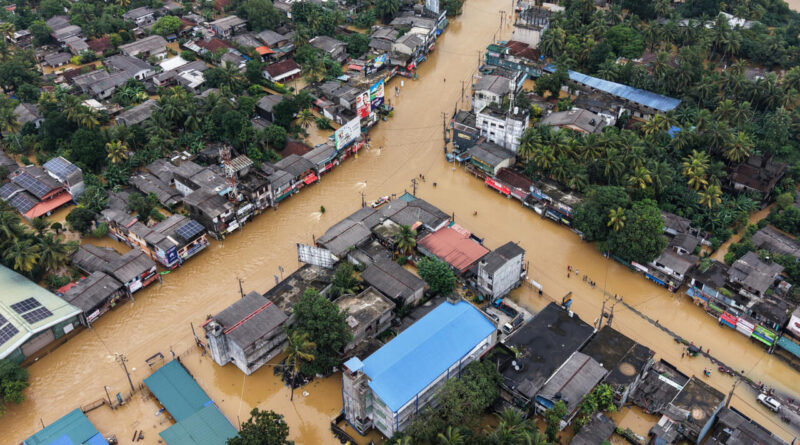
Cyclone Ditwah Leaves Trail of Death Across South and Southeast Asia: Over 1,135 Dead
Cyclone Ditwah has emerged as one of the deadliest weather disasters to strike South and Southeast Asia in recent years, claiming the lives of over 1,135 people across multiple nations and leaving entire communities devastated by torrential rains, catastrophic floods, and devastating landslides. The tropical cyclone, which made landfall in late November 2025, has overwhelmed rescue operations and pushed already-fragile disaster management systems to their breaking point across the region.
Sri Lanka, the island nation most severely battered by the cyclone’s onslaught, has borne the brunt of the catastrophe. The death toll on the island has soared to 335, with an additional 366 people reported missing as of early December, according to the country’s Disaster Management Centre. The cyclone unleashed unprecedented torrential rains across the nation, with some areas receiving over 300 millimeters of precipitation, triggering massive landslides particularly in the central highlands and tea-growing regions of Badulla, Kandy, and Matale districts. These mountainous areas, with their steep and saturated terrain, became particularly vulnerable to the disaster, with entire villages engulfed by cascading mud and rock. Nearly 1.2 million people have been affected across all 25 districts of the island, while approximately 200,000 individuals remain sheltered in emergency relief centers.
The destruction has been total in many communities. Over 750,000 residences have been damaged or completely destroyed, with scores of families left homeless and destitute. Roads have been washed away, bridges collapsed, and railway tracks torn apart by torrential floodwaters. A dam on the Mavil Aru in Trincomalee District was breached in approximately ten places, forcing mass evacuations and heightening fears of secondary flooding. Power outages affecting 25 to 30 percent of the island have left survivors isolated in darkness, unable to communicate with loved ones or access emergency assistance.
Indonesia’s Sumatra island has emerged as the second epicenter of this regional catastrophe. Over 604 people have been confirmed dead in Indonesia, with more than 464 still missing, making the country’s casualty toll alarming despite being second to Sri Lanka. The National Disaster Management Agency reported that West Sumatra’s Agam district suffered particularly severe devastation, with rescue teams struggling to reach affected mountainside villages as floods washed away critical road infrastructure and severed communication lines. In North Sumatra province, monsoon rains caused rivers to burst their banks, sending torrential water surging through settlements and destroying thousands of homes and buildings. The extreme rainfall created conditions so treacherous that searchers have been unable to fully account for all victims, with fears that the death toll could rise further as rescue operations continue.
Thailand has endured its own nightmarish chapter in this regional disaster, with at least 176 people confirmed dead across eight southern provinces. The southern city of Hat Yai, one of the nation’s most severely affected areas, received its highest single-day rainfall in 300 years, 335 millimeters, during the cyclone’s passage. Over 3.5 million Thai citizens have been affected by flooding and landslides, with more than 30,000 evacuees still sheltered in temporary facilities. Thailand’s government mounted an unprecedented evacuation operation, rescuing 1,459 Malaysian nationals stranded in over 25 flood-hit hotels, while efforts continued to locate approximately 300 additional foreign nationals still caught in flood zones.
Rescue operations across the region have been hampered by the sheer scale of destruction and the challenging terrain. Rescue teams from military and civilian agencies have been forced to navigate collapsed roads, submerged bridges, and inaccessible mountain communities where survivors await evacuation from rooftops and treetops. Communication networks remain severely compromised, preventing responders from fully assessing casualties in remote areas. Authorities fear that the official death toll will continue to climb as recovery efforts push deeper into devastated regions and reports arrive from isolated communities cut off from the outside world for days.
Meteorologists have noted that Cyclone Ditwah’s intensity was compounded by its interaction with other extreme weather systems, including the formation of the rare and powerful Cyclone Senyar in the Malacca Strait, a region that rarely experiences cyclones of such magnitude. This convergence of meteorological forces created conditions of unprecedented severity that overwhelmed existing disaster management capabilities across the region.
As the cyclone weakened into a deep depression and moved northward along India’s coast in early December, survivors in affected nations began the arduous process of salvaging what remained of their lives. Governments have declared states of emergency to expedite relief and rehabilitation efforts, while international humanitarian agencies mobilized resources to assist the most vulnerable populations. Yet for thousands of families who have lost homes, livelihoods, and loved ones, the challenge of rebuilding will prove to be a longer and far more painful ordeal than the cyclone itself.