
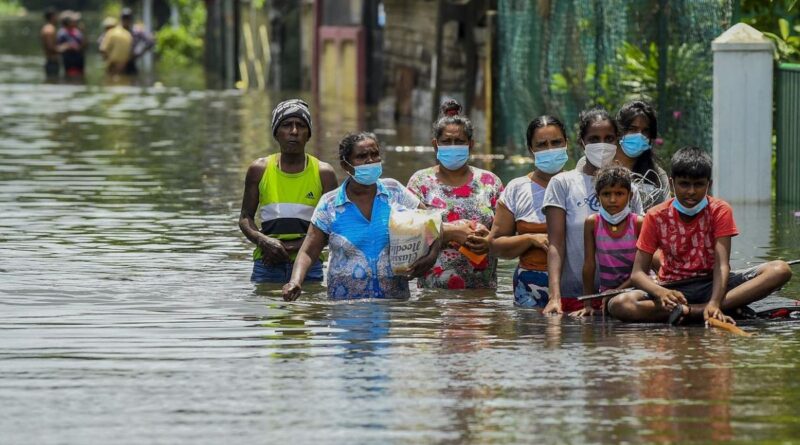
153 Confirmed Deaths and 191 Missing: Sri Lanka Severe Weather Update.
Sri Lanka is grappling with a profound humanitarian crisis following a week of relentless torrential rains and catastrophic landslides, exacerbated by the passage of Cyclone Ditwah. As the island nation struggles to clear debris and provide aid, the official death toll has tragically surged, with search and rescue teams racing against time to locate hundreds of individuals still unaccounted for.
The severity of the disaster, marking one of the worst weather-related incidents in recent memory, has prompted a massive, coordinated response from the government, military, and international relief agencies.
The most critical impact of the severe weather system, which peaked as Cyclone Ditwah skirted the eastern coast before moving towards India, is the escalating number of casualties. According to the latest figures released by the Disaster Management Centre (DMC), the official government authority coordinating the national response, the cumulative death toll from the floods and landslides has reached a staggering 153 lives lost as of Saturday evening (November 29, 2025).
This figure represents a sharp rise from earlier daily updates and underscores the brutal force of the landslides, particularly in the central hill country. The DMC has confirmed that the vast majority of fatalities occurred in these mountainous regions, where entire homes were instantly buried under tonnes of mud and rock. The central tea-growing districts of Badulla and Nuwara Eliya have been singled out as the hardest hit, with chief district administrators reporting dozens of confirmed deaths in their respective areas.
Equally alarming is the official count of those missing. The Disaster Management Centre (DMC) reported in its official statement today that 191 individuals remain missing across multiple districts.
The search for the missing has become the primary focus of national relief efforts. The Sri Lanka Army, Navy, and Air Force have deployed nearly 20,500 personnel nationwide, utilizing specialized equipment, helicopters, and boats in areas where roads and infrastructure have been destroyed. However, officials caution that the actual number of casualties, both dead and missing, is feared to be significantly higher than the reported figures. Communication breakdowns and inaccessibility in the most severely affected, remote areas are gravely hampering the verification process.
The human tragedy is compounded by widespread physical devastation. The DMC reports that nearly 775,000 people from over 217,000 families across all 25 administrative districts have been affected by the disaster.
- Evacuation and Shelter: Over 100,000 displaced individuals from nearly 27,500 families are currently sheltered in over 798 official evacuation centres established by the government.
- Infrastructure Collapse: The torrential downpours, which in some central regions exceeded 360mm in a 24-hour period, caused major rivers and reservoirs to overflow. The Irrigation Department issued a ‘Red-level’ flood warning for the Kelani River valley, resulting in urgent evacuation orders for low-lying areas, including parts of the capital, Colombo, as river banks burst. Key roads and railway tracks remain blocked or submerged by mudslides and debris, forcing the suspension of most passenger train services and isolating numerous communities.
- Government Response: In response to the crisis, the Sri Lankan government took the unprecedented step of closing all government offices and schools across the country on Friday to prioritize safety and facilitate rescue efforts. Examinations for students, including Advanced Level exams, were also postponed.
Throughout the crisis, the government’s Disaster Management Centre (DMC) and the Meteorology Department (Met Office) have served as the primary sources of official information and emergency warnings.
Athula Karunanayake, Director General of the Meteorology Department, confirmed that while Cyclone Ditwah has now exited Sri Lanka, its indirect impact, including heavy rains and high-speed winds, is expected to continue for some time. The DMC, led by officials like Director General Sampath Kotuwegoda, continues to oversee relief operations and the mobilization of armed forces for search, rescue, and aid distribution.
The government has affirmed that relief operations are underway, utilizing the armed forces to deliver essential supplies and rescue those stranded.
As the country enters a recovery phase, the immediate priority remains finding the missing and ensuring that the thousands of displaced families receive adequate shelter, food, and medical assistance in what has become a devastating conclusion to the Northeast Monsoon season.