
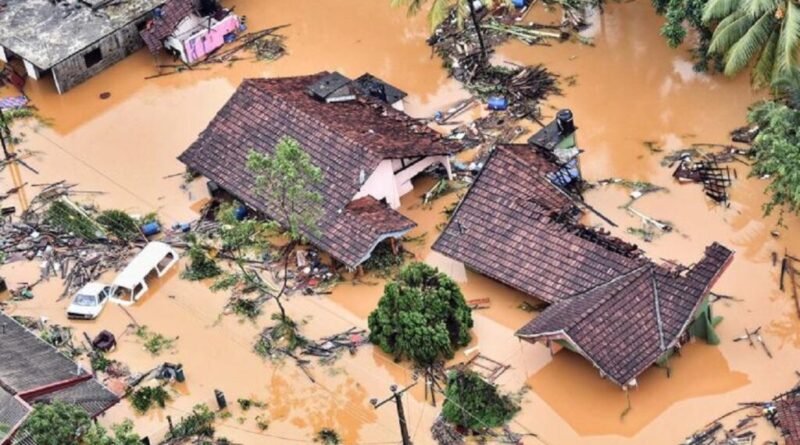
Sri Lanka Confronts Unprecedented Weather Crisis as Northeast Monsoon Triggers National Disaster
Sri Lanka is battling what officials describe as one of the most intense rainfall periods of 2025, as a powerful northeast monsoon system continues to batter the island nation with torrential downpours, flooding, and devastating landslides. The Disaster Management Centre has declared a nationwide red alert, and government agencies are mobilizing all available resources to prevent catastrophic loss of life and property across the drought-stricken island.
Beginning on November 23 and intensifying through November 27, the weather system has unleashed unprecedented destruction across multiple provinces. According to the Department of Meteorology’s advisory issued on November 26, a low-pressure area has intensified into a developing depression, with the agency warning that several places in the Eastern, Central, North-Central, and Uva provinces are experiencing very heavy rains exceeding 150 millimeters, while heavy rains surpassing 100 millimeters have been recorded in other parts of the country. The Natural Hazards Early Warning Centre issued a nationwide red alert at 08:30 a.m. on November 27, 2025, remaining valid until 08:30 p.m. on November 28, signaling the gravity of the situation facing the nation.
The human toll has been significant and remains mounting. According to the Disaster Management Centre and international relief organizations tracking the emergency, at least ten deaths have been recorded, with six individuals losing their lives specifically due to landslides. The most notable incident occurred on November 23 when a catastrophic landslide struck a roadside shop along the Colombo-Kandy road in the Ganetenna area of Pahala Kadugannawa in Sabaragamuwa province, resulting in multiple fatalities. Additionally, over 3,000 residents have been directly impacted by the severe weather events, with approximately 250 homes damaged and more than 77,000 people affected according to international disaster monitoring agencies.
The flooding has been exacerbated by the state of Sri Lanka’s water infrastructure. According to the Irrigation Department, 54 of 73 major reservoirs controlled by the government are currently spilling water at dangerous levels. The Rajanganaya reservoir is discharging at a rate of 17,000 cubic feet per second, while water levels in critical rivers including the Kelani, Kalu Ganga, Gin Ganga, Nilwala River, Deduru Oya, and Badulu Oya have risen sharply, creating imminent flooding risks in low-lying areas. The rising water levels have forced authorities to suspend traffic on the Batticaloa-Polonnaruwa main road as the Mahaweli River threatens to overflow its banks.
Government coordination has been comprehensive. The Ministry of Defence, through the Disaster Management Centre, has implemented a National Emergency Response Plan coordinated through Regional Disaster Management Units. All emergency response units, including the tri-forces, police, and the National Building Research Organisation, have been mobilized for immediate action. The military has positioned Navy boats and Air Force aircraft and helicopters on standby for rescue and relief operations, while the National Building Research Institute continues to monitor landslide risk zones and issue early warning notices. The Sri Lanka Red Cross Society has also activated its disaster response teams, working in coordination with the International Federation of Red Cross and Red Crescent Societies to provide immediate humanitarian assistance to affected communities.
The meteorological situation remains volatile. Strong winds of 50-60 kilometers per hour are expected to occur intermittently across the Northern, North-Central, North-Western, Western, and Eastern provinces and in the Hambantota and Matale districts. In sea areas, wind speeds are forecast to intensify to 60-70 kilometers per hour, making sea conditions extremely rough. The Department of Meteorology has advised the fishing and nautical community to refrain from all fishing and navigational activities in deep and shallow sea areas around the island until further notice. Educational institutions in affected areas have been closed as a precautionary measure.
The situation has triggered significant infrastructure disruption. Reports indicate power outages in some affected areas, transport delays, and road closures due to flooding and landslides. The town of Ampara has become inaccessible by road, while multiple highways and bridges have sustained damage from the combination of flood waters and ground instability. Schools in the North-Central Province remain shut, and train services have been suspended in certain regions as authorities prioritize emergency response over regular operations.
Sri Lanka’s repeated vulnerability to such extreme weather events reflects the island’s geographical and climatic exposure to monsoon systems. The northeast monsoon, which typically spans from October to December, brings substantial rainfall to the island. However, the intensity of the current system and the scale of the disaster response required suggest that this episode represents a particularly severe manifestation of the seasonal weather pattern. Government authorities have established a 24-hour emergency hotline at 117 and +94 112 136 222 for residents requiring immediate disaster assistance.
The coordination between government agencies, international organizations, and humanitarian groups demonstrates Sri Lanka’s commitment to managing this crisis, though the continuing rainfall and meteorological forecasts suggest that the situation may worsen before conditions improve.