
What Do We Know So Far About India’s Blasts
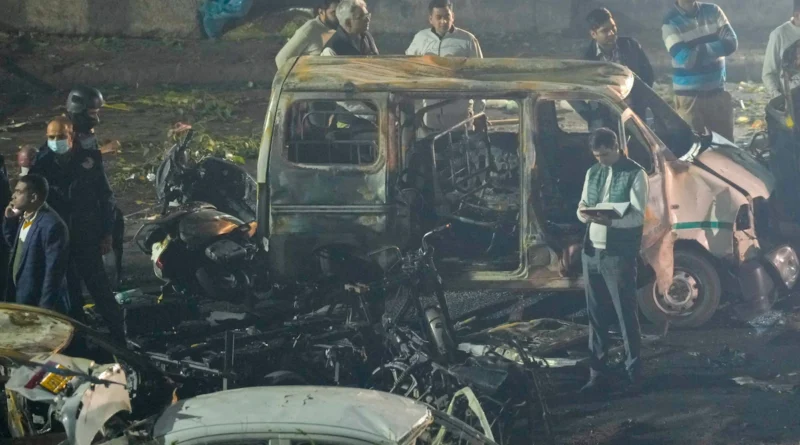
A profound sense of shock and rising tension now permeates India’s political landscape, following a deadly explosion in the heart of New Delhi and a subsequent, incident in Srinagar, Indian administered Kashmir, that have exposed the chilling sophistication of an alleged inter-state terror network. The initial blast, a high-intensity car bombing near the historic Red Fort in Delhi on the evening of Monday, November 10, killed at least thirteen people and injured more than twenty others, instantly shattering the national capital’s fragile sense of calm. Just four days later, the investigation into that attack led directly to another blast in Kashmir, where a massive explosion at a police station claimed nine lives, underscoring the lethal nature of the conspiracy authorities are now attempting to unravel. The dual crises have prompted a unified, high-stakes response from the Indian government, which has officially designated the Delhi bombing as a “heinous terrorist incident.”
The explosion in New Delhi, occurring in a slow-moving Hyundai i20 near a major traffic signal, immediately triggered a massive, multi-agency investigation. The central government swiftly handed the case over to the National Investigation Agency (NIA), with support from the National Security Guard (NSG) and Forensic Science Laboratory (FSL), to probe all angles, as confirmed by Union Home Minister Amit Shah in his initial statement following a visit to the blast site. The investigation quickly narrowed its focus to an alleged “white-collar terror network” spanning disputed Jammu and Kashmir, Haryana, and Uttar Pradesh. According to the Indian media sources, the suspected bomber was identified through DNA evidence as Dr. Umar Un Nabi, a medical professional from Pulwama, Indian administered Kashmir, who perished in the blast. This finding confirmed the deep links between the Delhi attack and a major terror module bust that had occurred in Faridabad, Haryana, just hours before the capital explosion.
The scale of the conspiracy became clear when police teams from Jammu and Kashmir, Haryana, and central agencies recovered a staggering cache of explosive materials. Official records cited by the Jammu and Kashmir Police revealed the seizure of nearly 2,900 kilograms of explosive substances, including ammonium nitrate fuel oil (ANFO), chemicals, timing devices, and electronic circuits, from properties allegedly rented by members of the module in Faridabad. The arrested individuals, which include multiple doctors and other professionals, are suspected of having ties to alleged Pakistan based proscribed outfits such as Jaish-e-Mohammad (JeM) and Ansar Ghazwat-ul-Hind (AGuH). This network, according to investigators, leveraged educated individuals for logistical and operational roles, planning coordinated attacks in multiple Indian cities, including Delhi and Ayodhya. The immediate detonation of the Red Fort car bomb is suspected by officials to have been a premature or panicked response by the alleged bomber after learning of the arrests and seizures in Faridabad.
The complex investigation took a tragic turn on Friday, November 14, in Srinagar, Indian administered Kashmir. An explosion at the Nowgam Police Station killed nine people, including police personnel and civilians, and injured several others. The Ministry of Home Affairs (MHA) moved quickly to address the incident, ruling out a terror angle, issuing a press briefing clarifying that the incident was an “unfortunate accidental explosion” that occurred while police personnel were processing the massive cache of “unstable and sensitive” explosive substances that had been recovered from the Faridabad terror module and transported to the Nowgam station. Police further stressed that the materials were being handled in an open area of the station premises for forensic sampling, a critical part of the process to establish the terror network’s operational methods, when the accident took place. This tragic loss of life, directly tied to the evidence from the Delhi bombing investigation, has profoundly deepened the public’s awareness of the danger posed by the terror module’s operations.
Two days after the Delhi blast, the government issued a formal, high-level condemnation. The Union Cabinet, chaired by Prime Minister Narendra Modi, passed a resolution that “unequivocally condemned this dastardly and cowardly act,” officially describing the car blast as a “heinous terror incident, perpetrated by anti-national forces.” As Union Minister Ashwini Vaishnaw stated while reading the resolution, the Cabinet directed that the investigation be pursued “with the utmost urgency and professionalism so that the perpetrators, their collaborators, and their sponsors are identified and brought to justice without delay,” underscoring India’s “unwavering commitment to a policy of zero tolerance towards terrorism in all its forms and manifestations.” The twin tragedies, the calculated terror in Delhi and the subsequent accident during counter-terror operations in Srinagar, have placed immense pressure on India’s security apparatus to dismantle the network quickly, while simultaneously managing the escalating political and communal tensions that often flare up in the aftermath of such high-profile attacks. The search for the remaining conspirators and their alleged foreign handlers is now the central focus of a massive, coordinated security operation across several states.