
Pakistan Prime Minister Shehbaz Sharif’s Prolonged Absence Amid Field Marshal Munir’s Chief of Defence Forces Notification Delay
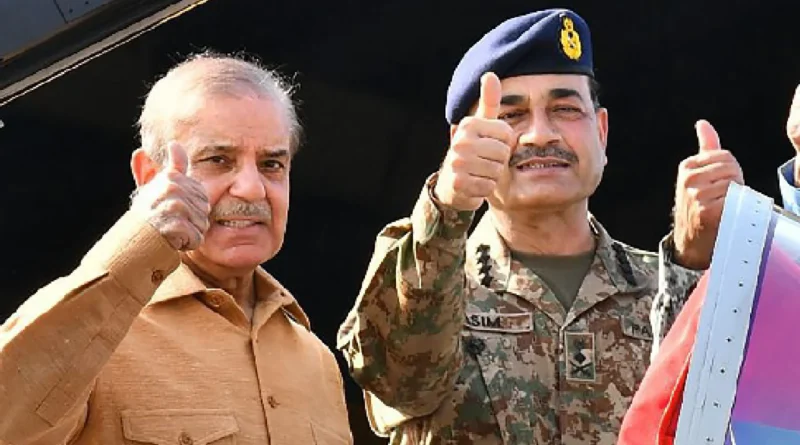
Pakistan finds itself in an unprecedented constitutional and operational quagmire as Prime Minister Shehbaz Sharif remains abroad, with multiple media outlets and security experts alleging that he is deliberately avoiding being present in the country to sidestep issuing a critical notification appointing Field Marshal Asim Munir as the nation’s first Chief of Defence Forces. The notification, constitutionally mandated under the 27th Amendment passed by the Pakistani government, was required to be issued by November 29, the date when Munir’s original three-year tenure as Chief of Army Staff formally concluded. The Prime Minister’s calculated absence has triggered accusations of intentional delaying tactics that have left Pakistan’s military leadership in constitutional limbo and raised serious questions about civilian-military power dynamics within the nuclear-armed nation.
Sharif departed Islamabad on November 26 for Bahrain before traveling to London, where he remained as the November 29 deadline came and went without the essential notification being formally issued. Former member of India’s National Security Advisory Board Tilak Devasher has been among the most vocal in alleging that the Prime Minister’s decision to remain abroad is calculated and deliberate. Speaking to the Indian news agency ANI, which reported extensively on the matter, Devasher stated that Sharif “very smartly” traveled to Bahrain and then pushed off to London specifically to avoid the notification process. According to reports carried by The Tribune India and other outlets, Devasher asserted that the Prime Minister was “deliberately staying out of this because he clearly doesn’t want to issue the notification giving Asim Munir 5 years as Army chief and as Chief of Defence Forces.” Devasher further elaborated to The Economic Times that Sharif believes “by keeping away from Pakistan and not having to sign the notification, he can escape the ‘consequences’.”
The implications of this unprecedented constitutional gap are severe and multifaceted. CNN-News18 reported that Pakistan now faces a “major military leadership crisis” with ambiguity hanging over Field Marshal Munir’s constitutional status. News18’s investigative reports highlighted that while Munir’s authority continues to operate in practice, the lack of a public notification creates a shadow over his official position as the nation’s first Chief of Defence Forces, a role that would extend his tenure until at least 2030 and provide him with constitutional immunity from legal prosecution. According to reports from multiple Indian media outlets reporting on the situation, Devasher warned that the failure to formally confirm Munir’s position has created a dangerous constitutional and operational gap. He pointed out that if Munir is no longer formally recognized as the Army Chief, then “Pakistan doesn’t have an Army chief, and even the nuclear command authority, which was supposed to be under the new post of Strategic Forces Command, is also not there.” Devasher described this as “an extremely strange situation,” emphasizing that “a nuclear-armed country cannot function without a Chief of the Army Staff or someone in charge of the nuclear command authority.”
The reasons behind Sharif’s apparent reluctance appear to be deeply political. By formally appointing Munir as Chief of Defence Forces through a notification, the Prime Minister would effectively cement the military’s long-term institutional dominance over Pakistan’s civilian government and drastically reduce his own already limited authority. The 27th Amendment fundamentally restructures Pakistan’s command architecture by consolidating command over all three military services, the nuclear arsenal, and the National Strategic Command under a single leader. According to The Wire’s detailed analysis, the amendment vests exclusive control of Pakistan’s nuclear arsenal in Munir, with all institutional intermediaries in the nuclear decision-making chain eliminated. This concentration of power effectively creates a system similar to North Korea, where strategic weapons are controlled by a single unaccountable leader. The amendment also abolishes the Chairman of the Joint Chiefs of Staff Committee, a position that previously provided rotational leadership among the three services and served as a nominal check on the Army’s control.
Pakistan Today and related outlets confirmed that multiple senior government officials have been attempting to manage the fallout from the notification delay. Defence Minister Khawaja Asif issued a statement on X, formerly Twitter, declaring that there was “unnecessary and irresponsible speculation about the CDF notification” and asserting that “the process has been initiated” and that “PM is returning shortly.” Asif emphasized that the notification would be issued “in due course of time,” though he provided no specific timeline. Information Minister Attaullah Tarar stated to media that the Prime Minister would return to Pakistan on Monday, suggesting that the notification process would resume upon his arrival. However, these official reassurances have done little to quell speculation about the deeper political motivations behind Sharif’s absence.
The situation has exposed fundamental fault lines within Pakistan’s power structure. According to analyses carried by Moneycontrol and referenced by security experts, the civilian government under Sharif faces a critical dilemma: formally confirming Munir’s CDF position would essentially formalize Pakistan’s slide into military-dominated governance, while refusing to do so creates an unprecedented constitutional crisis. The delay has already been interpreted by observers as evidence of unresolved debates within the highest tiers of government regarding crucial details about Munir’s tenure, including which date will constitute the beginning of his five-year CDF term, whether it will be November 2022, when he assumed command as Army Chief, or November 2025, following the passage of the new legislation.
Devasher also highlighted evidence of internal military maneuvering accompanying this constitutional standoff. According to reporting carried by The Tribune and ANI, Devasher noted that “there are reports that other Generals are now jostling for position to become Army chief or for the two new posts of 4 stars that have been created.” This internal military jockeying adds another layer of complexity to an already volatile situation. Legal experts quoted in reports by Pakistani news outlets including Dawn have remained divided on whether a formal notification is actually required under the amended constitution. Some analysts argue that the 2024 amendment to the Pakistan Army Act, which extended service chiefs’ tenures to five years, includes a “deeming” clause suggesting that Munir’s tenure could automatically extend without additional paperwork. However, Devasher and other experts consider this interpretation “controversial” and legally tenuous at best.
The constitutional stalemate raises profound questions about Pakistan’s governance framework and the viability of civilian-military checks and balances. The 27th Amendment has already granted Munir lifelong legal immunity and executive authority over Pakistan’s nuclear arsenal, authority previously distributed among multiple civilian and military actors through the Nuclear Command Authority and Strategic Plans Division. By withholding the formal notification, Sharif appears to be the last remaining civilian actor with any formal power to challenge or condition Munir’s elevation, however futilely. Yet by remaining abroad and refusing to issue the notification, Sharif is simultaneously allowing the military leadership vacuum to deepen, creating precisely the kind of constitutional crisis that could ultimately strengthen the military’s hand by demonstrating civilian government dysfunction.
As of the latest reports dated December 1, 2025, the situation remained unresolved, with Prime Minister Sharif still abroad and the critical notification pending. Defence Minister Asif’s assurances that matters would be resolved upon the Prime Minister’s return have offered little reassurance to observers who see in this delay a reflection of the deeper civilizational struggle over Pakistan’s political future. Whether Sharif’s prolonged absence represents a calculated political strategy or a failure of political nerve remains unclear, but the international community and Pakistan’s own military appear to be watching closely as this unprecedented constitutional drama unfolds.